Planning a Funeral for a Pet Lover: Ideas and Practical Steps
How to plan a funeral for someone who loved animals: who cares for their pets now, whether pets can attend, tribute ideas, and what the rules say about remains.
- Updated
- 6 min read
- 7 sources checked
- By Matt Morgan
The short answer
A funeral for a pet lover follows the same steps as any funeral, with a few extra decisions. Someone has to look after the person's animals right away, the venue decides whether pets can attend, and trained service dogs are the main case with a legal right of entry. Photos, stories and donations to a shelter can bring their animals into the service. Pet remains cannot be scattered at sea under the EPA permit for people.
Key takeaways
- If the person lived with animals, arrange their care first. Pets are property in law, so they pass through the estate, and the executor or next of kin usually decides who keeps them.
- Pets have no automatic right to attend. Funeral homes must admit trained service dogs under the ADA, but places of worship are exempt and emotional support animals are not covered.
- If a pet cannot come, a photo, the collar, a paw print, a slideshow, a story in the eulogy or a donation to a shelter can carry the animal into the service.
- The EPA's burial at sea permit covers human remains only, and the agency says pet ashes cannot be mixed with human ashes there. For cemeteries, rules differ by cemetery and state, so ask in writing.
- A pet trust in a will or estate plan lets someone fund an animal's care and can set out wishes for the pet's remains, which spares the family guesswork.
On this page
A funeral for a pet lover follows the same steps as any other funeral, plus a few extra decisions: who looks after the person's animals now, whether pets can come to the service, and how to bring the animals into the day. Pets have no automatic right to attend, because the venue decides. The rest is about ideas, and there are many good ones.
Who looks after the person's pets right now?
This comes first, because animals need food and company on the day of the death. The person's executor or closest relative usually arranges it.
- Check on the animals today. If the person lived alone, ask a neighbor, friend or relative to go in, feed them and let dogs out.
- Find the person's own plan. Look for a note, a pet trust, a will clause or a name on the vet's file as an emergency contact.
- Arrange temporary care. A friend, a boarding kennel or the vet can hold the animals while the family decides.
- Gather the records. Vet details, medications, microchip information, feeding instructions and the pet's usual routine help whoever takes over.
The law treats pets as property, so they pass to whoever inherits them under the will, or to legal heirs without one. That does not mean the heir must keep the animal, and it does not stop families from finding a better home. If no one can take the animals, contact a rescue or shelter for help before the situation becomes urgent. Our guide to what happens to a pet when the owner dies covers pet trusts, caregivers and the legal position in more detail.
Can pets come to the funeral?
Only if the venue agrees. A funeral home, church, cemetery or private venue sets its own policy, and asking early avoids an awkward moment at the door. There is one legal exception:
- Service dogs. Funeral parlors are listed as public accommodations in the Americans with Disabilities Act (42 U.S. Code 12181), so they must admit a dog individually trained to perform tasks for a person with a disability. Staff may ask only whether the dog is required because of a disability and what task it is trained to do.
- Places of worship. Religious organizations are exempt from those rules (42 U.S. Code 12187), so a church, mosque or temple can refuse animals.
- Emotional support animals. The Department of Justice says they are not service animals under the ADA, because they are not trained to perform a specific task. The venue can still say yes.
If a pet does attend, give it a handler who is not a close mourner, keep it leashed or in a carrier, sit near an exit and tell guests in advance in case of allergies or fear of animals. Our guide to including a pet in a funeral has a full checklist, including what venues to ask.
What are the ways to include a person's animals in the service?
If a pet cannot attend, or has already died, there are many gentle ways to put the animal in the room.
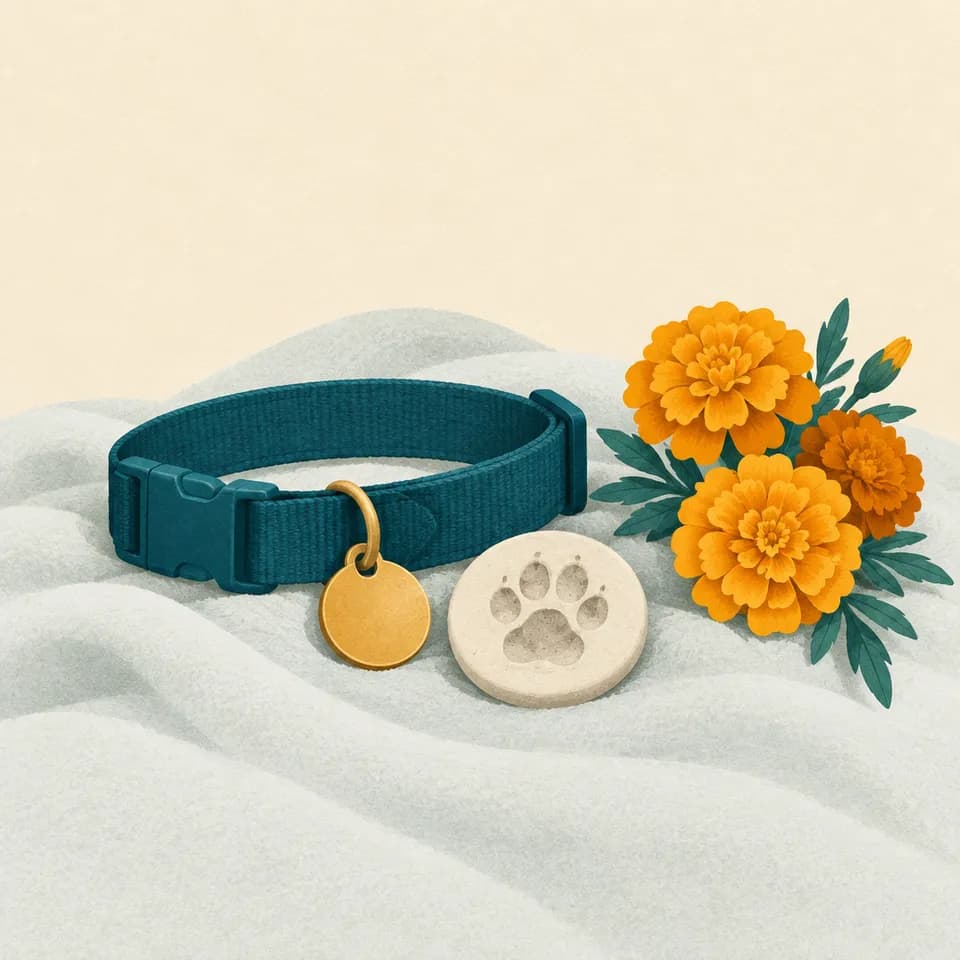
- A memory table with a photo of the person and their pet, a collar, a leash, a favorite toy or a paw print. See our memory table ideas.
- Stories in the eulogy. A few lines about the early morning walks, the cat on the keyboard or the dog waiting at the door say a lot about a person. Our guide on how to write a eulogy can help.
- A slideshow with photos of the person and their animals across the years.
- Music. A song the person sang to their dog, or played while they fed the birds, works as a quiet moment.
- A paw print in the guest book. An ink pad and a card is enough, and a clean-up wipe nearby helps.
- Donations instead of flowers. Name a shelter, rescue or vet charity the person supported, and see our guide to funeral donations etiquette.
- A memorial at an animal-friendly place. A park, a rescue's garden or the family's yard can host a celebration of life where pets are welcome.
A theme does not need to be elaborate. If the person worked with animals, volunteered at a shelter or bred show dogs, invite that community as well, and ask the family which stories they would like told.
Can a person's ashes go with their pet's ashes?
Sometimes, but rules differ, and the answer is worth getting in writing before you buy anything.
- At sea. The EPA's general permit for burial at sea authorizes human remains only. The agency says pet ashes and other animal remains cannot be buried or mixed with human cremated remains under that permit.
- In a cemetery. Many human cemeteries do not accept animal remains in a human grave or niche, and some do allow a small urn for a pet. The cemetery sets the policy, so ask the office in writing.
- In a companion urn. Some families keep both sets of ashes in adjoining urns or a companion urn at home. Our guide to pet ashes with human ashes explains the options and questions to ask.
- On private land or in a park. Owners and land managers set the rules. Scatter ashes, whether a person's or a pet's, only where the owner or manager agrees.
If you only want a keepsake that holds both, pet memorial jewelry and cremation jewelry let each person keep a small amount of ashes. Ask the maker how it keeps each set of remains separate.
What if the person's pet has also died?
Losing a person and a pet close together can feel like two griefs at once. The ASPCA notes that grief over a pet is normal and suggests memorializing the animal in a way that includes others who cared for it. That can mean including the animal in the same gathering, a joint photo display, or a separate small moment for the pet.
Some people find the loss of a pet is treated as smaller than it is. Our guide to disenfranchised grief explains why. The Association for Pet Loss and Bereavement runs chat rooms, support groups and webinars for people grieving an animal, including children.
If you are arranging a funeral for the pet itself, see our guides to pet cremation, pet cemetery burial and home pet burial laws.
How can you plan for your own pets ahead of time?
If you are a pet lover yourself, a few lines written now save your family guesswork.
- Choose a caregiver and a backup, and ask both before you write their names down.
- Consider a pet trust. Cornell's Legal Information Institute explains that a traditional pet trust has a trustee pay funds to a caretaker, and lets the owner set out what happens if the caretaker cannot continue and what happens to the pet's remains. Rules differ by state, so ask an estate planning attorney to draft it.
- Write your wishes. Say whether pets should come to the service, what should happen to pet ashes you are keeping, and which charity you would like donations to go to.
- Tell your executor where the vet records, microchip details and pet insurance information are.
Planning kit
My Funeral Wishes Planner
A fillable planner for your burial or cremation choices, service, music, budget and messages.
What to do next
- Make sure the person's animals are safe and fed today, and agree who is in charge of them.
- Ask the venue about pets, and get the answer in writing.
- Choose two or three ways to include the animals, such as a photo table, a story and a donation to a shelter.
- If you are hoping to keep pet and human ashes together, check the cemetery or land rules before you book anything.
Frequently asked questions
What happens to a person's pets when they die?
Can you bring a dog to a funeral?
Can a person's ashes be scattered with their pet's ashes?
What can you do if a pet cannot attend the service?
Should a pet lover's funeral mention their pets in the obituary?
How can I plan my own funeral so my pets are included?
Sources we checked
- 1.Service Animals: Frequently Asked Questions · ADA.gov, U.S. Department of Justice
- 2.42 U.S. Code 12181: Definitions (public accommodation) · Legal Information Institute, Cornell Law School
- 3.42 U.S. Code 12187: Exemptions for private clubs and religious organizations · Legal Information Institute, Cornell Law School
- 4.Burial at sea · U.S. Environmental Protection Agency
- 5.Pet trust · Legal Information Institute, Cornell Law School
- 6.Coping with the loss of a pet · ASPCA
- 7.Association for Pet Loss and Bereavement · Association for Pet Loss and Bereavement
Written by Matt Morgan, Founder and editor
Matt founded End of Life Tools and researches every guide from primary sources such as the FTC, SSA, VA, IRS and state law. He is not a licensed professional, and guides are general information, not advice.
Checked against 7 official and industry sources · Updated Sep 30, 2026How we write and check guides
Please note: General information, not legal, financial or medical advice. Check the details with the relevant agency or a qualified professional. Rules and prices change, so confirm anything important with the organization concerned. If you spot something out of date, tell us.
Related guides
More in Pet LossFree printable
Every task after a death, in the order you'll need it
Two pages to print, share with family and tick off as you go.