Pet Memorial Products: Urns, Jewelry, Stones and Keepsakes Compared
Pet memorial products compared: urns, cremation jewelry, garden stones, memorial trees and keepsakes without ashes, plus urn sizing and what to ask first.
- Updated
- 5 min read
- 5 sources checked
- By Matt Morgan
The short answer
Pet memorial products fall into a few groups: urns, wearable keepsakes such as cremation jewelry, garden stones and markers, living memorials such as trees, and keepsakes that need no ashes, like paw prints and photos. Choose by where it will live, whether you want ashes inside it, and how long you need it to last.
Key takeaways
- You do not have to buy anything when the ashes come home. Crematories usually return them in a temporary container, so you can take weeks or months to decide.
- Size an urn before you fall in love with it. A common rule of thumb is about one cubic inch of capacity per pound of your pet's weight, and CANA says aquamation returns about 32 percent more remains than flame cremation.
- Ashes are processed bone, mostly calcium phosphate, not plant food. Tree urns mix them with a growing medium, and the maker of one says planting ashes directly under a tree will not work.
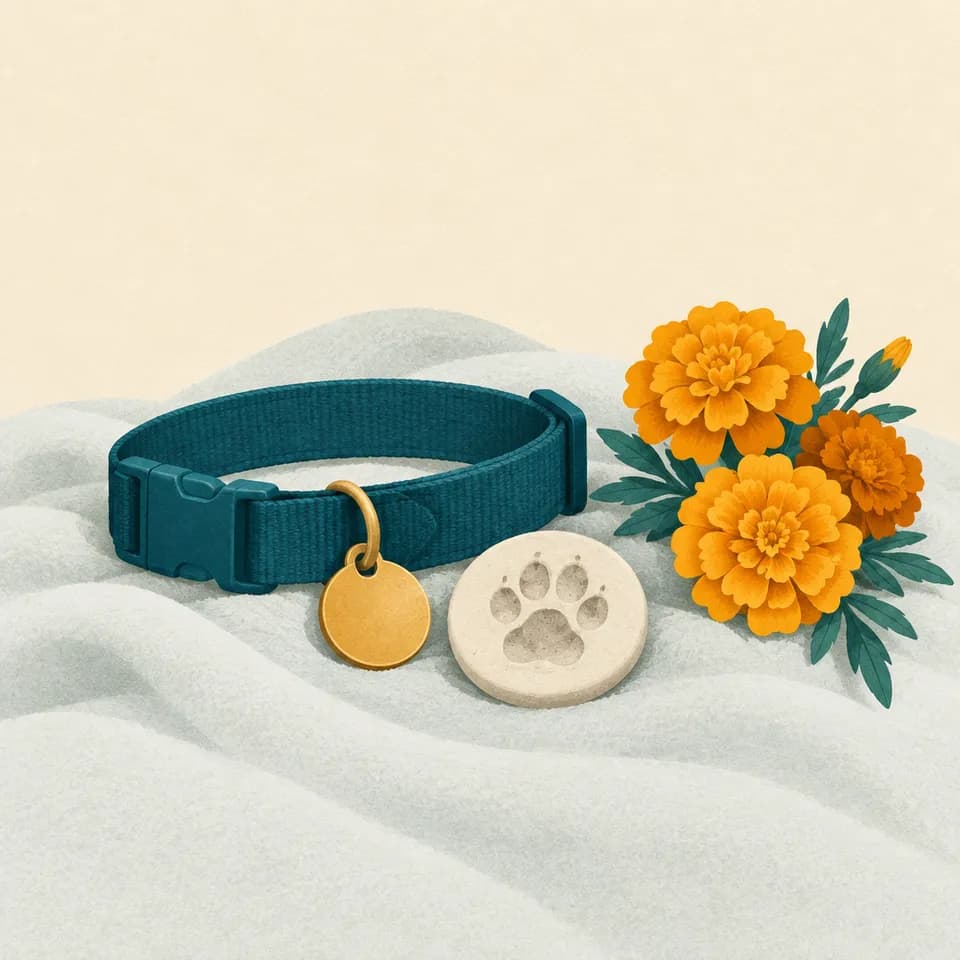
- Many keepsakes, such as a paw print, collar tag or framed photo, need no ashes, so they work if your pet was communally cremated or buried.
- Check return policies on custom work, how engraving is done, and local rules before you scatter or bury anything.
On this page
- What kinds of pet memorial products are there?
- How do you choose a pet memorial?
- What size urn do you need?
- What are the options for memorial jewelry and keepsakes?
- Can you plant a tree or use ashes in the garden?
- What if you have no ashes?
- What should you check before you buy?
- What mistakes do people make?
- What to do next
Pet memorial products are the things people buy or make to remember an animal: urns, cremation jewelry, garden stones, memorial trees, paw prints and photo keepsakes. Most do not need to be chosen quickly. The best starting point is where the memorial will live, whether it will hold ashes and how long it needs to last.
What kinds of pet memorial products are there?
| Type | What it is | What to check | Guide |
|---|---|---|---|
| Urn | A container for all or part of the ashes | Capacity, seal, material, how the name is engraved | Pet urn options |
| Cremation jewelry | A pendant, ring or bracelet holding a pinch of ashes or fur | How it seals, metal, whether it can be resized | Pet memorial jewelry |
| Garden stone or marker | A stone or plaque for the yard or a planter | Material, how the lettering is cut, frost and sun | Pet memorial stones |
| Memorial tree or living urn | A tree or plant, sometimes grown with ashes | Species for your climate, instructions, where it will be planted | Memorial trees |
| Memorial diamond | A lab-grown stone made from carbon in the ashes | Turnaround, price, how the maker handles your ashes | Pet ashes into diamonds |
| Keepsakes without ashes | A paw print, nose print, fur, collar tag, photo or framed piece | Whether it must be made before cremation | See below |
How do you choose a pet memorial?
Start with your pet and your home, not the product.
- Do you want to keep ashes at home? An urn on a shelf is the simplest route. Jewelry holds only a small amount.
- Do you rent, or might you move? Portable memorials such as an urn, jewelry or a framed print travel with you. A garden stone does not.
- Do others need to be included? Children and other family members may want a say, such as picking a photo or planting a flower.
- How long should it last? A wooden box and an outdoor stone age differently.
- Is there a budget? Prices vary widely between a simple keepsake and custom work, so decide what you want to spend before you browse.
A tool to compare keepsakes can narrow the options by budget.
What size urn do you need?
Check the capacity before anything else. Urn makers list it in cubic inches or pounds of ashes, and a common rule of thumb is about one cubic inch of capacity per pound of your pet's weight. This is not an official standard, so confirm it with the crematory, which knows how much it will return.
- Aquamation returns more remains. CANA says alkaline hydrolysis produces about 32 percent more remains than flame cremation and may require a larger urn.
- Ashes are usually in a bag or temporary container. Leave a little extra room.
- Compare listed capacities. Capacity varies widely. A tree urn made for pets, for example, lists a capacity of 2.9 pounds.
- Check the closure. A threaded lid or screw seal keeps ashes secure, and a loose lid does not.
If you are keeping ashes from more than one pet, look for a companion urn made for it, and check its total capacity.
What are the options for memorial jewelry and keepsakes?
Cremation jewelry holds a small pinch of ashes, or sometimes fur, in a sealed chamber. It suits people who want to carry a pet with them. Ask how the piece seals and whether the maker has sent ashes safely before. Memorial diamonds, glass pieces and similar items use a small amount of ashes too, so ask how the provider returns the unused portion. You can read more in our guides to pet memorial jewelry and memorial diamonds from pet ashes.
Can you plant a tree or use ashes in the garden?
Yes, with the right product. The Cremation Association of North America describes cremated remains as mainly calcium phosphates with minor minerals, so they are processed bone, not plant food. The maker of the Bios Urn says planting ashes directly under a tree will not work, and its pet version (listed at $99 on the maker's FAQ page) mixes them into a growing medium. The maker also advises choosing a species native to your region.
Rules for burying or scattering ashes differ by state and by property, and public land needs permission. See our guides to memorial trees, home pet burial laws and what to do with pet ashes.
What if you have no ashes?
Some memorials need no ashes, which helps if your pet was cremated communally or buried.
- A paw print or nose print, ideally made before your pet is cremated.
- A lock of fur or a collar tag in a small box or frame.
- A framed photo with a short line about your pet, or a printed story.
- A garden stone or plant in a spot your pet liked.
- An online memorial page with photos and stories for friends to add.
- A donation to a shelter or rescue in your pet's name.
- A memory box for the collar, toys and records.
The Association for Pet Loss and Bereavement has online memorials and chat rooms for people who want a place to share stories.
What should you check before you buy?
- Return and cancellation policy. Custom engraving and diamonds are often final once made.
- Turnaround time. Custom pieces can take weeks, which is another reason not to rush.
- Where your ashes go. Ask how a company handles and returns the ashes you send, and how they label them.
- Materials and finish. Ask what the piece is made of and how the lettering is applied, especially for outdoor items.
- Shipping. Use a tracked service when sending ashes.
- Buyer protections. The FTC Funeral Rule is written for funeral homes arranging funerals, and its guidance does not mention pets, so do not assume the same price-list rights apply. Ask for prices in writing.
What mistakes do people make?
- Buying before the ashes arrive. Wait until you know how much you have.
- Choosing the wrong size. Check capacity against what the crematory says you will receive.
- Assuming any container is an urn. A decorative jar with no seal can leak or let in moisture.
- Putting an unprotected stone outdoors. Check how it handles frost and sun.
- Feeling pressure to spend. A simple photo and a small plant can be as meaningful as an expensive piece.
What to do next
- Ask the crematory how much you will receive, and wait for the ashes.
- Decide whether you want a container, something to wear or a garden memorial.
- Compare two or three options, and read the return policy.
- Choose when you are ready. There is no deadline.
Frequently asked questions
What size urn do I need for my pet?
Do I need to choose an urn straight away?
Can I plant a tree with my pet's ashes?
What can I do if I do not have my pet's ashes?
Can more than one pet share a memorial?
Are memorial products regulated?
Sources we checked
- 1.The cremation process · Cremation Association of North America
- 2.Alkaline hydrolysis · Cremation Association of North America
- 3.Bios Urn FAQ · Bios Urn
- 4.The Funeral Rule · Federal Trade Commission
- 5.Association for Pet Loss and Bereavement · Association for Pet Loss and Bereavement
Written by Matt Morgan, Founder and editor
Matt founded End of Life Tools and researches every guide from primary sources such as the FTC, SSA, VA, IRS and state law. He is not a licensed professional, and guides are general information, not advice.
Checked against 5 official and industry sources · Updated Sep 30, 2026How we write and check guides
Please note: General information, not legal, financial or medical advice. Check the details with the relevant agency or a qualified professional. Rules and prices change, so confirm anything important with the organization concerned. If you spot something out of date, tell us.
Related guides
More in Pet LossFree printable
Every task after a death, in the order you'll need it
Two pages to print, share with family and tick off as you go.