Green Burial Sites in the UK: How to Find and Choose a Natural Burial Ground
How UK natural and woodland burial grounds work, how to choose one, what they cost and what the Law Commission's 2026 reports mean for new methods.
- Updated
- 6 min read
- 9 sources checked
- By Matt Morgan
The short answer
A green or natural burial in the UK is a burial in a woodland, meadow or dedicated part of a cemetery, usually without embalming and often in a shroud or biodegradable coffin, with a tree, plaque or no permanent marker. There is no single national register, so you choose a site by visiting it and asking about rules, fees and long-term protection. In England, groundwater risk is assessed through planning and Environment Agency permitting, and the Law Commission published reform proposals in 2026.
Key takeaways
- Natural burial grounds include woodland, meadow and council 'green' sections. Rules on coffins, markers and visiting vary from site to site, so ask before you book.
- In England, new burial grounds need groundwater risk assessments, and Environment Agency guidance sets out extra considerations for natural burial sites, such as lower burial densities and ecological management.
- Natural burial is not automatically cheaper. SunLife's 2026 report puts a simple attended burial at £4,758 on average, and site fees vary widely.
- In England and Wales, register the death within 5 days, then give the certificate for burial (the 'green form') to your funeral director or burial authority. Scotland allows 8 days and has its own process.
- The Law Commission's 2026 reports propose consistent safeguards for burial grounds and a route to approve water cremation and human composting in England and Wales, but nothing has changed in law yet.
On this page
A natural or green burial ground in the UK is a burial site managed for nature, often a woodland or meadow, where graves are usually marked with a tree, a small plaque or nothing permanent. There is no single national register of sites, so you choose one by visiting it and asking what it allows. The legal paperwork is the same as for any burial, and the Environment Agency assesses groundwater risk when new burial grounds are created.
What types of green burial site are there?
Green burial sites differ in how they are run, so the experience can vary a lot.
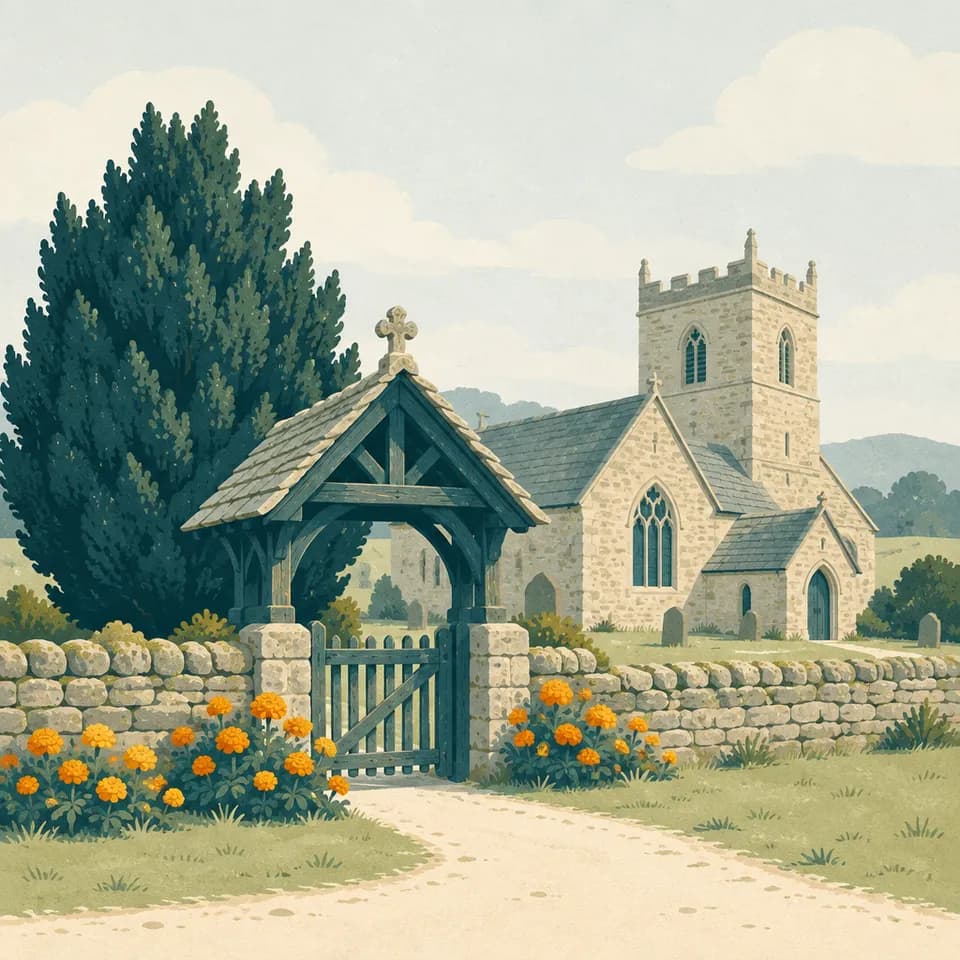
- Woodland burial grounds. Graves are often marked with a native tree, and the site is managed as a growing wood.
- Meadow and wildflower sites. Open land left to grow naturally, with seasonal change and few permanent markers.
- Council or cemetery green sections. Some local authority cemeteries set aside a natural area within a larger cemetery. These are often the easiest to reach by public transport and may be the most familiar setting.
- Privately run sites. These can be independent, charity-run or linked to a land trust, and their rules are set by the owner.
The Environment Agency's groundwater guidance for England says natural burial sites have distinct features, such as lower burial densities and planted trees or shrubs, and that sustainable materials and ecological management of the land are extra considerations.
How do you find and choose a natural burial ground?
Start by asking your funeral director, or contact your local council's bereavement services. Citizens Advice also points people to the Natural Death Centre, a charity that gives free advice on funerals.
Then visit, if you can, in more than one season. Ask these questions:
- What containers are allowed? Coffins, shrouds, or both, and any rules on materials.
- Is embalming allowed? Many natural sites ask for none or only approved products.
- How are graves marked? Tree, plaque, recorded location, or no marker. Can family plant or leave flowers?
- What is the long-term plan for the land? Ask whether it is protected in a way that will hold for the long term, such as a trust, covenant or conservation arrangement.
- How long does the burial right last? Get the length of the right and any renewal terms in writing.
- What is included in the fee? Grave digging, maintenance, marker and any record of the location.
- What are the practical rules on services? Is there shelter, parking, access for people with limited mobility, and can you hold your own service?
The Law Commission's March 2026 report on burial and cremation recommends consistent safeguards across all burial grounds, such as minimum burial depths and standardised record-keeping. Those are proposals, not yet law, but asking for written terms now is sensible.
How do you arrange a natural burial?
The steps are the same as for any burial in England and Wales. Scotland has a different process, covered in our Scotland guide below.
- Register the death. GOV.UK says to do this within 5 days in England and Wales (8 days in Scotland). You are then given the certificate for burial or cremation, often called the green form.
- Choose a funeral director or arrange it yourself. GOV.UK says you can hire a funeral director or arrange a funeral yourself. A funeral director who works with natural burial grounds can advise on coffins and shrouds.
- Give the green form to the funeral director or the burial authority.
- Book the grave and date with the site, and confirm coffin or shroud, marker and service details.
Our guides to UK death registration, UK burial and cremation law and Scotland funeral laws cover the wider process. If you are thinking of burial on private land, read our home burial laws UK guide first, because separate rules and permissions apply.
What do the environmental rules say?
In England, the Environment Agency regulates groundwater risk from burials under the Environmental Permitting Regulations 2016. Risk assessments are needed for things such as planning applications and permits, and since 2 October 2023 the highest-risk new cemeteries need an environmental permit. Low-risk new cemeteries can operate without one if they meet conditions, which for developments with planning permission from 2 October 2023 include:
- at least 1 metre between the base of a grave and the top of the water table
- at least 30 metres from springs and watercourses
- at least 250 metres from wells, springs or boreholes used for drinking water or food production
- at least 10 metres from field drains
- no burials in ancient woodland (and a 50 metre buffer to protected sites)
- a limit of 2,500 burials per hectare
These rules are for site operators, and they answer a common worry. New burial grounds, including natural ones, go through groundwater risk assessment through planning or permitting. If you have a concern about a specific site, ask the operator or the Environment Agency.
What does a natural burial cost?
Costs vary widely, because the site, the coffin or shroud, the funeral director's fees and the burial right are all priced separately. GOV.UK says costs include funeral director fees, third-party costs such as the burial fee, and local authority burial or cremation fees. Citizens Advice notes that a burial fee usually includes preparing the grave.
For a benchmark, SunLife's 2026 Cost of Dying report puts the average simple attended burial at £4,758, against £3,518 for a simple attended cremation. The report does not break out natural burial separately, so ask each site for a full price list. A natural burial avoids some costs such as embalming or an ornate coffin, but it is not automatically cheaper. See our UK burial cost guide.
Help with costs
Funeral Expenses Payment in England and Wales can cover burial plot fees, travel and transport, and up to £1,000 for other costs such as funeral director fees, flowers or the coffin, if you receive a qualifying benefit. It is deducted from the estate, and Scotland uses a separate Funeral Support Payment. Read who is eligible for Funeral Expenses Payment and our UK funeral financial help guide.
What is changing in UK burial law?
The Law Commission has been reviewing burial and cremation law for England and Wales in separate stages:
| Stage | Status |
|---|---|
| Burial and cremation | Final report published 18 March 2026. Covers burial space, grave reuse, direct cremation transparency and unclaimed ashes. |
| New funerary methods | Final report and draft bills for England and for Wales published 4 June 2026. The government is now reviewing the recommendations. |
| Rights and obligations | Report expected by mid-2028. |
The new funerary methods report covers water cremation (alkaline hydrolysis) and human composting, which the Law Commission says are not covered by any specific legal framework in England and Wales, so it is unclear whether their use would be lawful. It recommends a power to approve individual new methods by regulation, with principles of dignity, environmental protection and public health. None of this changes what you can arrange today. See our guide to aquamation vs cremation for the methods themselves.
What to do next
- Ask your funeral director or council which natural burial sites are nearby, and visit two.
- Get the price list, burial right terms and coffin or shroud rules in writing.
- Tell your family your wishes now. Our natural burial grounds guide can help you compare options.
Frequently asked questions
Is green burial legal in the UK?
Do you need a coffin for a natural burial?
Can you have a headstone at a natural burial site?
Does natural burial contaminate groundwater?
Can I get help paying for a natural burial?
Is water cremation or human composting legal in the UK?
Sources we checked
- 1.Register a death, then get the certificate for burial or cremation · GOV.UK
- 2.Arrange the funeral · GOV.UK
- 3.Cemeteries and burials: groundwater risk assessments · Environment Agency, GOV.UK
- 4.Low environmental risk cemeteries: exemption conditions · Environment Agency, GOV.UK
- 5.Funeral Expenses Payment · GOV.UK
- 6.Burial and Cremation project · Law Commission
- 7.New Funerary Methods project · Law Commission
- 8.Cost of Dying Report 2026 · SunLife
- 9.Arranging a funeral · Citizens Advice
Written by Matt Morgan, Founder and editor
Matt founded End of Life Tools and researches every guide from primary sources such as the FTC, SSA, VA, IRS and state law. He is not a licensed professional, and guides are general information, not advice.
Checked against 9 official and industry sources · Updated Sep 30, 2026How we write and check guides
Please note: General information, not legal, financial or medical advice. Check the details with the relevant agency or a qualified professional. Rules and prices change, so confirm anything important with the organization concerned. If you spot something out of date, tell us.
Related guides
More in UK FuneralsFree printable
Every task after a death, in the order you'll need it
Two pages to print, share with family and tick off as you go.